

Plants Die After Buying & How to Save Them
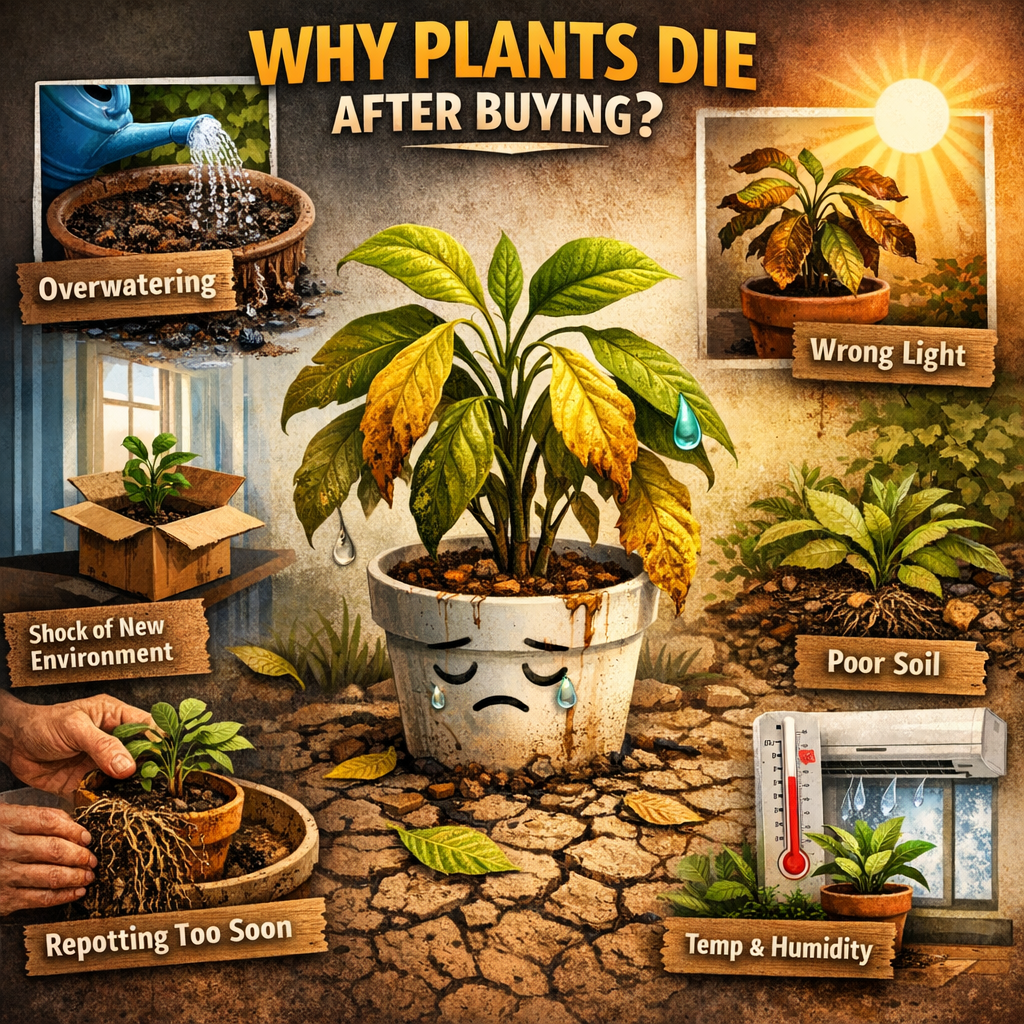
Why plants die after buying is a question many new plant parents ask when their beautiful green friend suddenly starts drooping, turning yellow, or losing leaves. Bringing a new plant home is exciting, but the journey from nursery to your home can be stressful. Changes in light, temperature, watering, humidity, and soil may affect its health. Fortunately, the right care and a little patience can help your plant adjust and thrive..
Why does this happen?
If you have experienced this, you are certainly not alone. The good news is that your plant may not be dying because you are a bad plant parent.
Often, the real problem is stress caused by the sudden change in environment and care.
Let’s uncover the hidden reasons why plants die after buying and learn how to give your new green friend the best possible start.
1. Sudden Environmental Shock: The Silent Plant Killer
Sudden environmental changes can cause plant shock. A plant may experience stress when it moves from a carefully maintained nursery to a completely different home environment. Different light levels, temperature, humidity, and watering habits can make the adjustment difficult. During the first few days, give your new plant time to settle into its surroundings.
This change can cause transplant or environmental shock.
What Causes Plant Shock?
Your plant may experience several changes at once:
- Different sunlight
- Different temperature
- Different humidity
- Transportation stress
- Changes in watering
- A completely different location
As a result, the plant needs time to adjust.
Common Signs of Plant Shock
Watch for these warning signs:
- Drooping leaves
- Yellow leaves
- Leaf drop
- Slow growth
- Temporary wilting
💡 How to Help a New Plant Adjust
Give your plant a quiet adjustment period.
Keep it in a suitable location and avoid making several changes at once. Do not immediately repot, fertilize, or repeatedly move the plant around.
A period of about 5–7 days can help many plants settle into their new surroundings.
2. Overwatering: When Too Much Love Hurts
Overwatering is one of the most common mistakes new plant owners make. Too much water can reduce the oxygen available around the roots. As a result, the roots may become weak or begin to rot. Before watering, check the soil and make sure the plant actually needs moisture.
What Happens When You Overwater?
The problem can develop gradually:
- Soil remains wet for too long
- Roots receive less oxygen
- Roots become weak
- Root rot may develop
- Leaves begin turning yellow
- The plant eventually declines
💧 How to Water Correctly
Before reaching for your watering can, check the soil.
For many common potted plants, allow the upper 1–2 inches of soil to dry before watering again. However, the ideal schedule depends on the plant species, pot size, soil, temperature, and season.
👉 Remember: “More water ≠ more love.”
3. Wrong Light Placement Can Hurt Your Plant
Light is one of the most important factors in plant health.
Unfortunately, placing a plant in the wrong location can create problems surprisingly quickly.
Too much intense sunlight may cause leaf scorch. On the other hand, insufficient light can result in weak, slow growth.
Signs of Incorrect Lighting
Your plant may show:
- Brown or scorched leaves
- Pale leaves
- Long, weak stems
- Slow growth
- Leaf drop
☀️ Find the Right Spot
Before buying a plant, learn about its light requirements.
Some indoor plants prefer bright indirect light, while others can tolerate direct sunlight. Place the plant according to its specific needs rather than choosing a location based only on appearance.
4. Repotting Too Soon Can Add Extra Stress
A new plant has already experienced transportation and environmental changes.
Repotting it immediately can create another major disturbance.
During repotting, the roots may be disturbed. The plant then has to adjust to both its new environment and its new container.
🪴 Should You Repot a New Plant Immediately?
Usually, there is no need to rush.
Allow the plant to settle for around 1–2 weeks if it is healthy and comfortable in its existing pot.
There are exceptions. Immediate repotting may be appropriate if the plant has serious drainage problems, severely damaged roots, pest issues, or another urgent problem.
Give your plant time to breathe before giving it a new home.
5. Temperature Changes Can Shock Your Plant
Plants can struggle when exposed to sudden temperature changes.
A plant placed beside an air conditioner may receive continuous cold airflow. Another plant sitting next to a heater can experience excessive heat and dry air.
Avoid These Common Locations
Try not to place sensitive plants:
- Directly beside an AC
- Next to a heater
- In strong drafts
- Beside constantly open windows during extreme weather
🌡️ Create a Comfortable Environment
Choose a stable location with suitable temperature and airflow.
Remember that different plants have different temperature and humidity preferences. What feels comfortable for you may not necessarily be ideal for your plant.
6. Low Humidity Can Cause Leaf Problems
Some plants naturally prefer humid environments.
When indoor air becomes very dry, especially around air-conditioning systems, certain plants may develop crispy leaf edges or dry-looking foliage.
Signs of Low Humidity
Look for:
- Brown leaf edges
- Dry leaves
- Curling foliage
- Increased water loss
💧 How Can You Improve Humidity?
Depending on the plant, you can consider:
- Grouping plants together
- Using a humidity tray
- Keeping plants away from direct AC airflow
- Using a humidifier when appropriate
Avoid blindly misting every plant. Humidity requirements vary considerably between species.
7. Poor Soil Quality Can Slowly Destroy Plant Health
A beautiful pot cannot compensate for unhealthy soil.
Heavy or poorly draining soil can hold too much water around the roots. Extremely poor soil can also restrict root development and nutrient availability.
What Does Good Potting Soil Need?
For many container plants, a suitable potting mix should provide:
- Good drainage
- Air around the roots
- Moisture retention without becoming waterlogged
- Appropriate nutrients
Depending on the plant, ingredients such as cocopeat, perlite, compost, and other suitable materials can be incorporated into a quality potting mix.
Always choose the mix according to the specific plant rather than using one formula for everything.
8. Transportation Stress Can Affect a New Plant
There is another reason your plant may look unhappy after reaching home: the journey itself.
Plants can experience shaking, temperature changes, reduced airflow, and changes in light during transportation.
A plant that looked perfect at the nursery may therefore appear tired when you first bring it home.
🌱 What Should You Do?
Handle the plant gently after bringing it home.
Give it suitable light, avoid unnecessary movement, and follow its normal watering requirements.
Most importantly, do not panic at the first sign of drooping.
Give the plant some time to recover.
9. Too Much Fertilizer Can Make Things Worse
New plant owners sometimes try to help a struggling plant by immediately adding fertilizer.
That can be a mistake.
A stressed plant does not necessarily need extra fertilizer. Excess fertilizer can damage roots and create additional stress.
🌿 A Better Approach
First identify the actual problem.
Check:
- Soil moisture
- Light
- Drainage
- Temperature
- Pests
- Root condition
Once the plant has settled and is actively growing, follow an appropriate fertilization schedule for its species.
10. Pests May Be Hiding on Your New Plant
Sometimes the problem isn’t watering or sunlight.
Your new plant may already have unwanted visitors.
Common pests include:
- Aphids
- Mealybugs
- Spider mites
- Whiteflies
- Scale insects
🔍 Check Your Plant Carefully
Inspect the underside of leaves, stems, and new growth.
Look for tiny insects, sticky residue, webbing, white cotton-like spots, or unusual leaf damage.
Early detection makes pest management much easier.
The Emotional Truth: Your Plant’s Death Doesn’t Mean You Failed
When a plant dies, it can genuinely feel disappointing.
You chose it carefully. brought it home with excitement. And imagined watching it grow.
Then suddenly, the leaves begin to disappear.
It hurts because you cared.
But remember this:
Plants don’t die because you’re a bad plant parent. Sometimes, they simply need care that matches their individual needs.
Every failed plant teaches you something.
The next plant you bring home can benefit from that experience.
You are not starting again. You are starting wiser. 🌱💚
How to Keep Your New Plant Happy
Before bringing a new plant home, remember these simple rules:
✅ Learn its light requirements
✅ Check the soil before watering
✅ Use a well-draining potting mix
✅ Avoid immediate repotting unless necessary
✅ Keep it away from harsh AC or heater airflow
✅ Check regularly for pests
✅ Avoid unnecessary fertilizer
✅ Give the plant time to adjust
Small changes can make a big difference.
Final Thoughts
Buying a beautiful plant is only the beginning of your gardening journey.
The real magic happens when you understand what your plant needs.
Give it the right light. Also balanced watering. Give the roots good soil. Most importantly, And give it time and patience.
Because a healthy plant doesn’t just make your home greener.
It makes your home feel alive. 🌿❤️
🌱 Nursery on Click
At Nursery on Click, our goal is simple: to help you bring more greenery, happiness, and nature into your everyday life.
Choose a plant. Bring it home. Give it love. Watch it flourish.
Nursery on Click — Happiness With Nature. 🌿